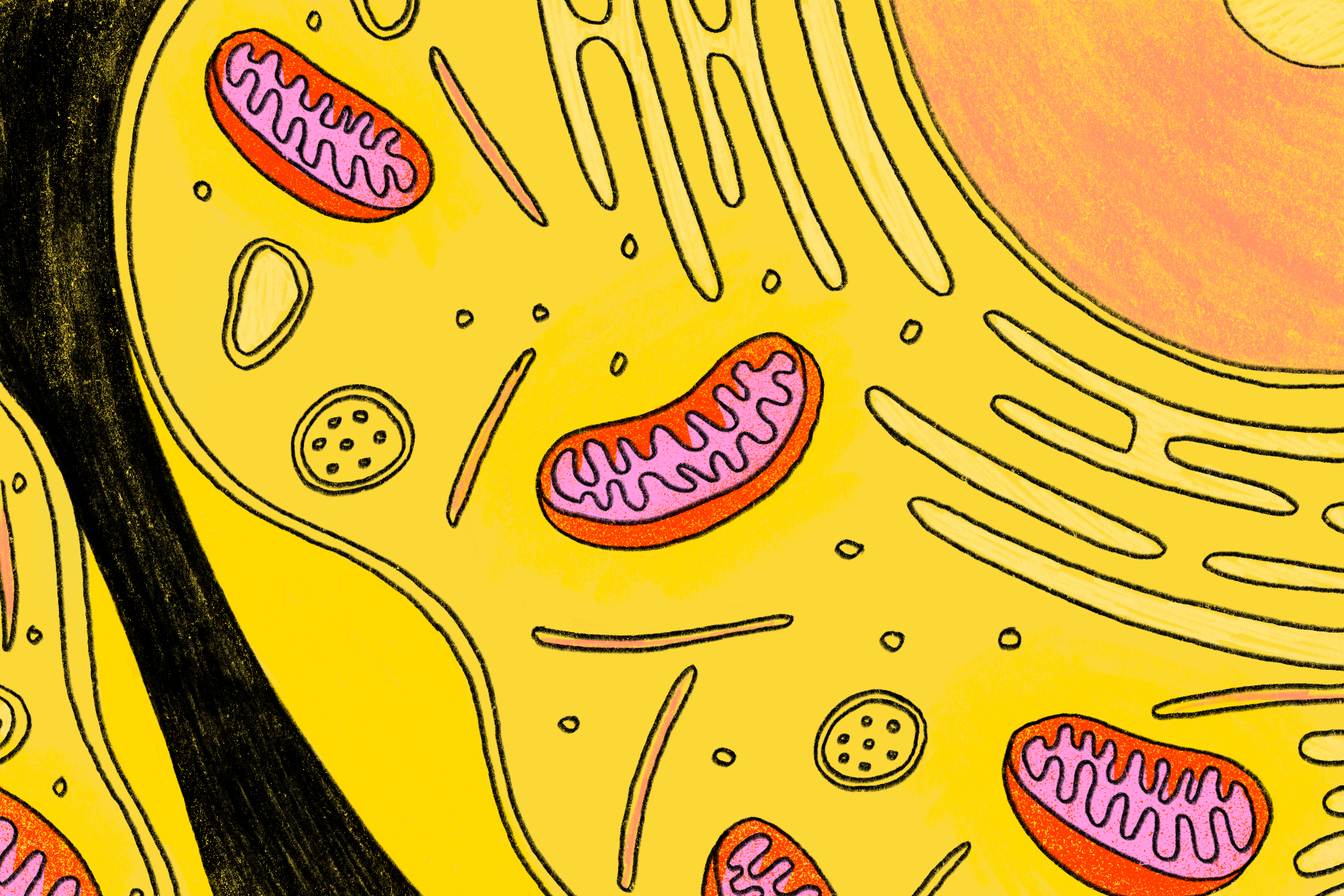
Over the past couple of years, celebrities, tech bros, and biohackers have come to believe they’ve found the ultimate source of good health. Boosting this one thing, they say, will cure all ails, rejuvenate the body, and lead to longer life. They are talking about the star of middle-school biology class: mitochondria.
The “powerhouse of the cell” has gained recognition recently as possibly an overlooked player in our bodies’ well-being. Celebrities like Hailey Bieber and Gwyneth Paltrow are supposedly fans of NAD+, a coenzyme crucial for mitochondrial function, now offered at medspas via injections, supplements, or IV infusions. A crop of biotech startups are selling at-home assessments of your mitochondria (prices range from $349 to $699), and public figures like longevity-obsessed millionaire Bryan Johnson, podcaster Joe Rogan, and Surgeon General nominee Casey Means have spoken publicly about the importance of mitochondria for health.
While this might seem like just another pseudoscientific “wellness” trend, behind the surge in popularity is a growing body of genuine academic research advancing our understanding of how mitochondria work, and how they could contribute to human health. Japanese researchers, for example, recently found that a mitochondrial gene in mice can influence longevity, and scientists at Duke University recently published research showing that replenishing a person’s mitochondria could be a way to reduce the pain of diabetic nerve damage.
Still, it’s reasonable to want to see more evidence before you spend $699 to “unlock the full potential of your cellular health” and “experience the future of NAD+ boosting.” Here’s how to separate what is real from what is marketing when it comes to mitochondria and your health.
How mitochondria help our bodies function
You might remember from biology class that mitochondria are responsible for turning sugars from our food into energy. This means that mitochondria are hugely important for keeping your body functional. They are responsible for your metabolism, and therefore also control how energetic you feel, says Martin Picard, an associate professor of behavioral medicine at Columbia University who studies mitochondria.
In addition to generating energy, mitochondria are involved in the development of cells, the creation of natural bodily steroids, proper hormone regulation, and ensuring that the right cells are programmed for cell death.
A variety of health issues arise when mitochondria don’t work properly. A few rare genetic conditions can cause mitochondrial malfunction, and people with these conditions often have weak muscles, cognitive disability, liver and kidney problems, and heart abnormalities — though they’re a very small percentage of the population (experts estimate they affect one in 4,000 live births). But mitochondrial dysfunction can also play a role in more common conditions. Research has shown that it can worsen symptoms of Parkinson’s disease, and both cause and result from type 2 diabetes. Because of mitochondria’s role in providing our body with energy, experts also suspect that mitochondrial dysfunction plays a role in chronic fatigue syndrome as well, says Picard.
Mitochondria also tend to deteriorate with age. In fact, worsening mitochondrial function is thought to be a driver of biological aging, says Kay Macleod, a University of Chicago researcher who studies mitochondria’s role in cancer. And having lots of well-functioning mitochondria helps to limit or slow down aging, she says.
Are those trendy mitochondrial therapies legitimate?
By definition, most people do not have the rare conditions that make mitochondria dysfunctional, and ordinary people really have no way to assess their mitochondrial health. The companies advertising mitochondria screening might be able to give you a snapshot into your mitochondrial health, says Daria Mochly-Rosen, a Stanford scientist who co-wrote The Life Machines, a book about mitochondria and health. But she doubts the technology is at a place where these tests can meaningfully and thoroughly provide insight into all your mitochondria’s functions. That said, some researchers, like Picard, are optimistic that we’ll soon have saliva or blood-based tests that can provide that.
Macleod is skeptical. For one, mitochondria in different organs serve slightly different needs — the mitochondria in your liver aren’t doing exactly the same job as those in your brain. She doubts any screening could give you a full picture of how all the mitochondria in your body are functioning. And even if they could, she asks, “what would you do with the information?”
While mitochondria are critical for health, not all of the advertised “solutions” for mitochondrial health have merit. For example, while experts know that NAD+ is a crucial molecule for mitochondria’s functioning, the idea of a NAD+ IV drip is a little nonsensical, says Macleod.
“NAD+ by itself doesn’t go inside your cells,” she says.
Since it’s a water-soluble compound, it has no way of getting into your cells, even if it’s piped directly into your bloodstream. When scientists want to increase the NAD+ in a cell, they will treat it with an NAD+ precursor, which cells can take in and then transform into NAD+. One such precursor is nicotinamide riboside, a form of vitamin B3, which you could take as a supplement, says Macleod, but it’s better to just get it through a healthy diet.
Another trendy “remedy” for mitochondria is methylene blue, a medication that’s mostly used today as treatment for methemoglobinemia, a rare blood disorder. Bryan Johnson experimented with it, and Secretary of Health and Human Services Robert F. Kennedy Jr. has been suspected of using it. In response to a question about whether people should look into methylene blue for their mitochondria, Mochly-Rosen just laughed and said, “Um, no.” (Macleod hadn’t even heard of methylene blue.)
What actually helps your mitochondria function
The best thing you can do for your mitochondria is embrace the healthy habits you’re likely already familiar with: exercising and eating healthy.
The link between mitochondria and exercise is particularly strong. A 2019 review published in The Journal of Physiology describes exercise as “the most potent behavioural therapeutic approach for the improvement of mitochondrial health.” Other research has shown that exercise can improve the mitochondria of sedentary adults and spur the production of more mitochondria and mitochondrial proteins. Research from scientists at York University in Toronto also suggests that, through exercise, you can get your mitochondria to more closely resemble those of younger adults.
Diet is also an important factor for mitochondrial health. Eating too much sugar overwhelms mitochondria, says Picard, which can lead to insulin resistance and diabetes.
And like everything else in your body, mitochondria need to rest and recover. “Metabolically, mitochondria switch from using glucose during the day to using fat during the night,” Mochly-Rosen says. Some research suggests that if you eat a particularly late dinner or have a midnight snack, you force your mitochondria to keep processing glucose, and they don’t have time to rest. To offset this, Mochly-Rosen suggests not eating too late at night, though she declined to recommend a specific regimen.
As for supplements that claim to be formulated for mitochondrial health, Picard says he’s “not sure boosting mitochondrial health with a supplement stack is a solution.” From Macleod’s point of view, the whole culture around dietary supplements feels a bit misguided. “A lot of the time in biology it’s important not so much to have very low or high levels of something, but to have the right level,” she says. People will hear that a vitamin or mineral is crucial for good health and then take a supplement that contains way more than the daily requirement. Too much of a good thing is possible, Macleod says, so the better option is to just eat a balanced diet.
Whether you’re living for your mitochondria or not, the basic recommendations for health and longevity essentially remain the same. If thinking about the well-being of your mitochondria motivates you to embrace exercise or eat more vegetables, then by all means, dive in. If, however, you are someone with an established foundation of healthy habits, thinking more about your mitochondria probably won’t make a huge difference — which is fine. After all, what’s good for mitochondria is good for the rest of the body, and vice versa.